
📅 WEDNESDAY, OCTOBER 28 · 6:00 PM CET · 45 MIN
What Wins on Tabular Data:
a Foundation Model or Gradient Boosting?
Gradient boosted trees have been the default for tabular data for a decade. Every new table means training a new model, tuning hyperparameters, and hoping you have enough rows for reliable results. Tabular foundation models take a different approach: one model, pretrained once, that generalizes to tables it has never seen.
In this 45-minute session, Arturo Amor (scikit-learn core developer) benchmarks TabICL, an open-source tabular foundation model, against gradient boosting on real datasets. You will see:
- Where each method delivers better accuracy, and where it does not
- How dataset size changes the outcome
- How to decide which approach fits your next project
What this webinar covers
Foundations
What tabular data, tabular AI and tabular ML are, what makes a model a foundation model, how in-context learning works, and the analogy with LLMs
TabICL pretraining
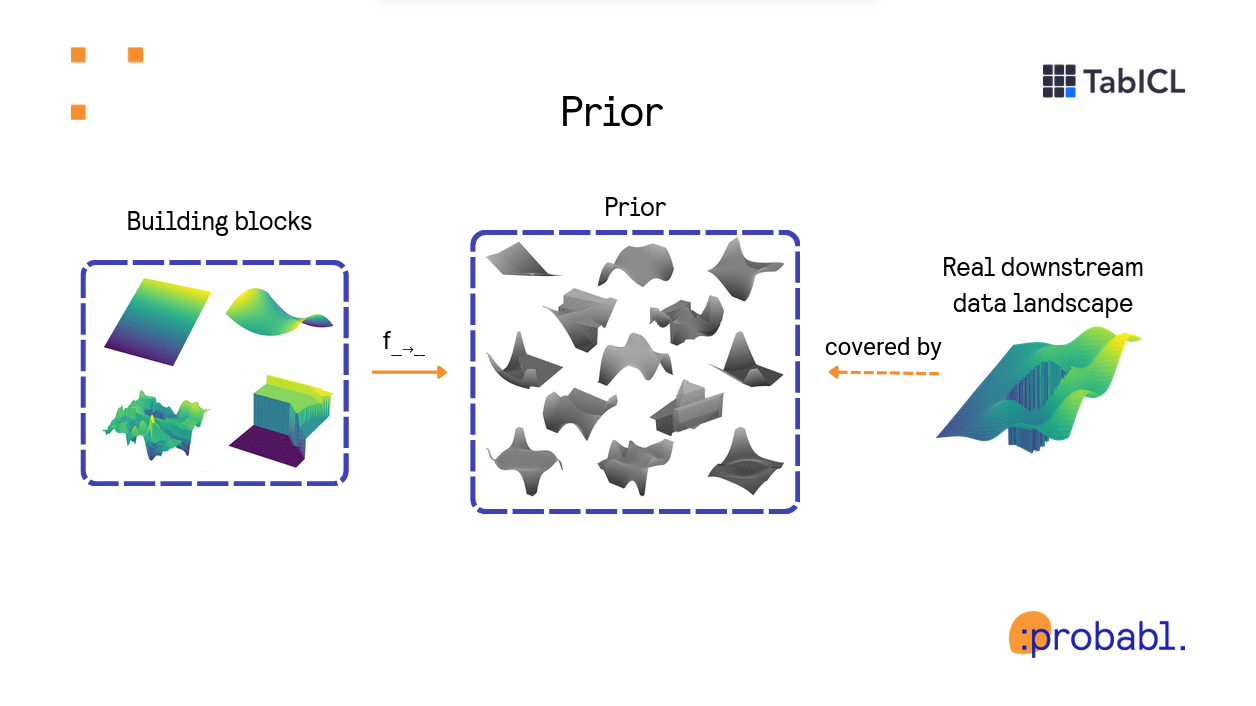
Why pretraining uses synthetic tables rather than scraped real ones. Structural causal models, priors, and what they encode.
Benchmarks
Bike demand regression and fraud detection classification. TabICL vs. gradient boosting on computing time, evaluation metrics, dataset size, prediction interval coverage, and probability calibration.
Q&A
Bring your dataset questions.
Leading the session

Arturo Amor,
scikit-learn core developer, Co-founder at Probabl
Arturo has been a core contributor to scikit-learn since 2021. He works on the training and certification team, developing educational materials that help practitioners build practical ML skills. His background is in theoretical quantum physics, with a PhD from UNAM (Mexico) and a postdoc at École Polytechnique (France).
Don't miss the conversation
Your next model could skip the tuning step entirely.
See the benchmarks and decide for yourself.
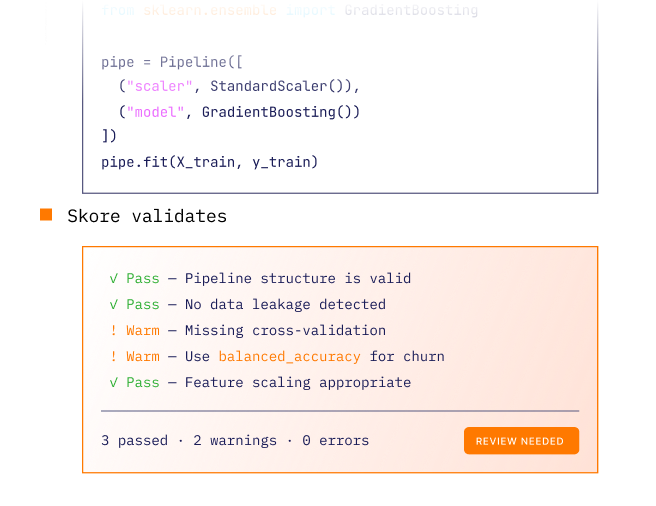
Gap 01 — AI agents
Your AI writes the code. Skore makes sure it works.
Skore sits between your AI agent and your stack: it prevents data leakage, picks the right metrics, surfaces detailed validation reports, and flags hidden errors early—embedding expert judgment for juniors and turning senior standards into a reusable capability.
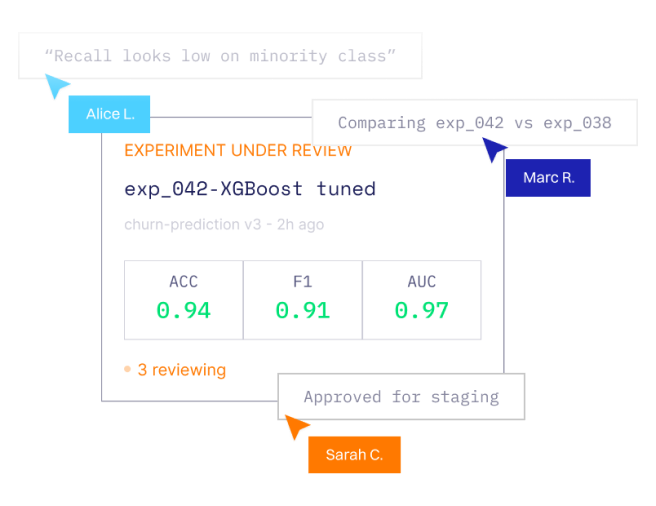
Gap 02 — The team
From individual talent dependence to industrial standard
Skore gives your team a shared, searchable workspace for every experiment, with consistent guardrails and versioning—so nothing is lost when people change projects or leave the organisation.
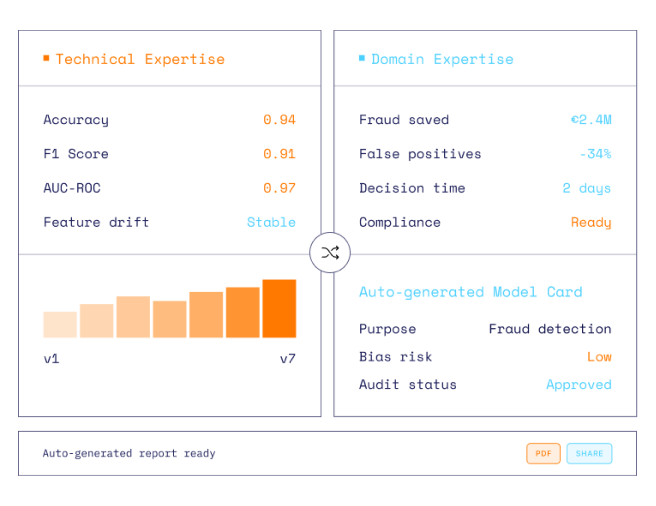
Gap 03 — The business
Bridging data science and the people who fund it
Skore ties custom business metrics to every model report—structured, versioned, and traceable—so data scientists explain less and decision-makers get results they can act on.